
Losing My Religion

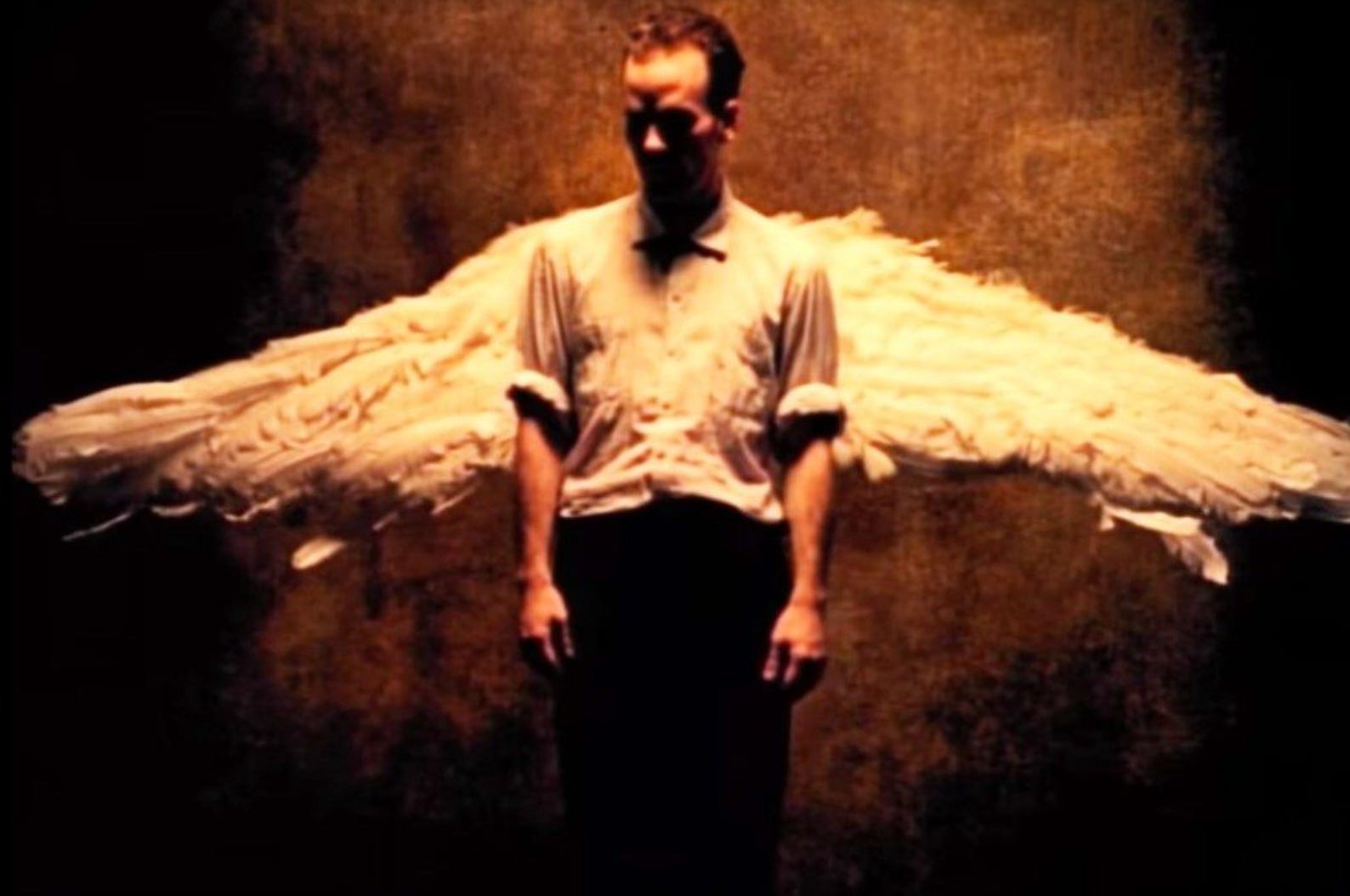
Still image from R.E.M’s “Losing My Religion” music video.
On the spiritual journey, the message is always to you. The message is always telling you to change. Now, what most religious people do is they use religion to try to change other people. It’s always someone else that needs changing. No. Stop it. Once and for all. Whatever happens in your life is a message to you. It’s telling you something about you. Oh, the ego wants to avoid that. So we look for something out there to change. Somebody not like me is always the problem. (Adapted slightly from a lecture “Men and Grief” by Richard Rohr)
Rohr puts his finger on a vital point that turned a light on for me about 17 years ago. I feel his observation can be the basis for a true spiritual inventory.
Think of the church you attend. Do your pastor’s sermons focus week after week on what is wrong with those people “out there” or does your pastor challenge you to look at yourself and move toward greater wisdom and maturity?
Are your Facebook friends–those in the habit of posting updates with religious content–largely casting judgment on others or encouraging others in their journeys onward and upward?
Do your seminary professors look down upon other theological traditions and train you to demolish their systems, or are they leading you toward greater humility along with depth of understanding in preparing you for Christlike leadership in the church?
When you have a minute, a few moments of quiet, take stock of the Christians you hang around with.
Are they religious, as Rohr defines them?
Do they think they have arrived and others are simply in need of correction?
Is the problem always someone else who is not like them?
If your answers are yes, you are not in a healthy Christian community.
Let’s nip something in the bud, shall we. I am not saying that Christians should always agree, never call others into account, or never say someone is just plain wrong. I am talking about whether the dominant message you hear is about what’s wrong with “them” or whether it is about you and your growth in humble, loving, Christlikeness.
To anticipate another objection: no, focusing on yourself in the spiritual life is not narcissistic. Actually, passing judgment on others because you feel you are right and have little to learn from others is about as narcissistic as you can get. Focusing on one’s own spiritual journey takes tremendous courage and humility, because what we find deep down in our souls is often quite ugly and unnerving.
This is what Rohr means by the ego wanting to avoid spiritual introspection. “Ego,” as Rohr and others use the term, refers to that part of ourselves that wants to project a “self” to the world that appears intact, together, in control, when in fact that self is actually a false self–a self that is superficial, inauthentic, a coping mechanism, a show.
The biblical word for all this is hypocrisy, which is the core complaint Jesus had againt the religious leaders of his day, the Pharisees and the Sadducees.
So, look around you. What does your Christian community look like?
Does it nurture the false self, which is sin, or the true self, which is the self that grows once we lay down our false sense of control and submit ourselves to a wise and loving God?
Does it present itself to the world as the crowning moment in the history of Christ’s Church, where all others are in need of their tutelage, or does it model for you Christlike humility and love?
And when you are done doing that, turn your gaze on yourself. You have to, you know, or this whole exercise is one big contradiction.
Are you in the habit of thinking of your own views on theology as the one sure thing in your life that does not have to move and all others as objects to benefit from your insight?
When you come to disagree with others on theological matters, is your first instinct to defend your views because you “know” the problem is with “them?”
Do you think of yourself as on the inside and judge others by how much like you they are?
I want to scrutinize my own ego and thus lose my religion. Otherwise my journey is stalled at the gate.
I find that to be a hard process.
Thanks for this. I used to find great comfort in knowing—in being surrounded by people who had the Truth all wrapped up. There was real safety in that camaraderie, and I can’t pretend I was anything less than a willing participant. I’ve left that circle of confidence and stepped into something far less comfortable. I’m not anchored anymore. I feel genuinely adrift. But I’m starting to suspect that this unsettled place may be closer to God than the “knowledge” I once threw around like a velvet-covered brick. If I’m sure about anything these days, it’s how much I really don’t know. I don’t love that. It’s disorienting and humbling and pretty unsettling. But it does feel more honest. And I don’t have to defend what I don’t know. That part’s a relief.
Nothing has stalled my faith journey more than the times I had Big Epiphanies. I don't want to diminish the impact of these realizations, but they have a tendency to make me want to stay there. Nothing gets in the way of your next experience of God like the last experience of God. Sigh.